Thai food etiquette
A Thai meal is shared. Plates go in the middle, everyone gets their own rice, and the spoon in the right hand does the work while the fork only pushes. Learn that, plus how to ask for your heat level, and a first meal stops being guesswork.
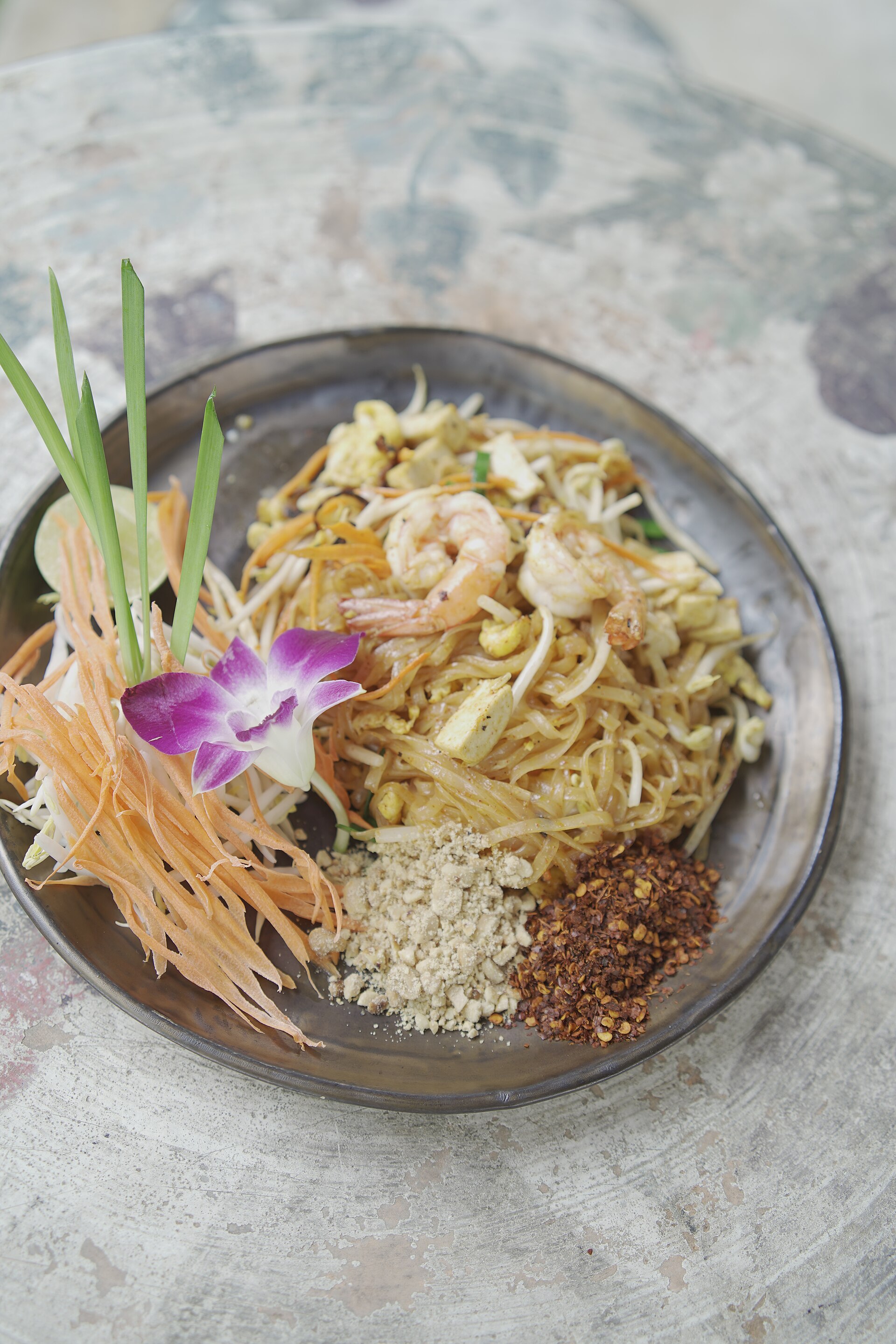
Photo: Kenamparo (CC BY-SA 4.0)
Eat rice with a spoon in the right hand. The fork pushes food onto the spoon. Chopsticks are for noodle bowls, not for a rice plate, and they should not stand upright in the rice. Dishes in the centre are shared. Each person gets a plate of rice. A one-plate meal, such as fried rice or a noodle bowl, is the exception.
Say "pet nit noi" for a little heat and "mai pet" for none. "Check bin" asks for the bill. Stalls are cash. A street plate is often 40 to 80 THB. Tipping is not required. At a sit-down room, rounding up or leaving 20 to 50 THB is enough. Spice words sit on the heat page. ATM notes are on the money page.
Phrases that matter
- Aroi means delicious. Use it if you mean it.
- Mai sai phrik means no chili. Pet nit noi means a little.
- Kin khao is the meal itself. You do not need a speech before you order.
More food guides

Book


Compare Across Southeast Asia: Thai Food vs. Vietnamese Food
Eating your way across Southeast Asia? Pair Thailand’s wok-fired street stalls and regional curries with Vietnam’s herb-bright broths, banh mi, and specialty coffee.
Vietnamese Food Guide & Dish Directory
Regional dish breakdowns, street-stall addresses, and ordering rules for pho, bun cha, banh mi, cao lau, and egg coffee.
Explore Vietnamese Food Guide →Northern Broths & CoffeeHanoi Street Food Guide
Charcoal-grilled bun cha, beef pho at dawn, crispy crab spring rolls, and Old Quarter café culture.
Read Hanoi Food Guide →Southern Markets & SeafoodHo Chi Minh City & Da Nang Food Guides
Late-night shellfish alleys, broken rice plates (com tam), crispy banh xeo crepes, and Central Vietnamese noodle bowls.
Read Saigon Food Guide →Common questions
- Do you tip?
- Not at stalls. At a sit-down room, 20 to 50 THB or rounding up is enough.
- Shoes?
- Off only if the room asks, which is rare in a restaurant and normal in a home.